It was about time we listened to
The Top 10 Employee Voices
- Global Edition -
Recognizing the stories, struggles, and innovative ideas of employees shaping the future of work in many locations.
About the initiative
What is Top 10 Employee voices ?
It’s a curated celebration of employees who are reshaping the world of work with courage, authenticity, and vision.
We spotlight one voice at a time — real people, real stories, real impact.
Built by people who believe the future of work must be inclusive, transparent, and human-first.→ Published exclusively via LinkedIn & top10employeevoices.com
→ Featuring one employee voice per issue — across industries and backgrounds
→ Leading to the first-ever Top Employee Voices Awards in 2026, hosted in Cyprus.
(STAY TUNED for MORE locations & initiatives across the "Top Voices" Eco-System)

Now LIVE •
This Week’s Featured Voice
Each Thursday's feature spotlights one bold mind reshaping work in Cyprus — no fluff, just real insight and impact.Curated bi-weekly, human-first.
The Unsent Voice
Editorial Takeover Series

Dear manager...
Millions of employees have written this email in their heads. Very few ever press "Send." - Editorial Board -
Deano Symeonides Editorial Takeover
Business psychologist | Coach | L&D designer | July 31 2026 · 7 min read
" Dear manager,It’s Sunday. 2am. And I’m tired. But can’t sleep.I've never written anything like this before. For some reason it’s important to me you know that.It’s just an email, I know, not a big deal. But it is to me. And I’m usually better at expressing myself in writing, words this way have always come easier to me.OK, here goes.I’m not a complainer. I’m not entitled. And I don’t put my needs over the needs of my team.I’ve been called a people-pleaser many times. An introvert. Not loud or braggy or talking for the sake of talking. But neither label ever captured what I actually felt. I simply think I care too much. About the work, the team, all of it.I’m now at a crossroads. Stuck.And I’ve been sitting with these thoughts for a few months now. Lots of sleepless nights and 2am thinking about what I’m doing with this job, this career, my life.
------
I’m not a machine.I’m a hard worker. I arrive on time, work way beyond my contract’s obligations, and deliver on deadlines. I don’t call in sick, unless I physically cannot leave my bed.I don’t waste anyone’s time with politics or noise, the kind that gets some of my colleagues recognised and bumped up. And why should I have to anyway? I feel I’ve been hired to do a job well, and that’s what I do. It doesn’t make sense to have to market my work to anyone.I just get on with it.But I have a body that gets tired. A mind that needs an off switch, to recover before it can get going again for work. 10pm emails don’t allow me to switch off like I should. Nor do weekend tasks for Monday deadlines.I’d estimate, on a normal day, you get roughly six or seven hours of quality work from me. The rest, I’m present, functional, but I’m not operating at 100% capacity. That’s just biology.Everyone’s like this and I’m no exception. The difference is that I never speak up about it. And I never say no to you, or anyone else for that matter.Most people have learned to look busy when you’re watching. Yet you’ve scolded me twice this month for reading up on new regulations during those down times. Never quite mastered passing the surveillance test.I’m not good at acting busy. But you’re mistaking all this effort of mine for a limitless reservoir. Something to be drained fully before the day’s done.And because of this, I’m constantly trying to absorb the gap between what’s realistic and what you’ve decided I should be able to deliver. Over and above my job description. You know, that ‘extra mile’ everyone likes tossing around the place.This gap is costing me. Big.
------
I have a life.A life beyond this job. One you know nothing about. And that’s the way it’s supposed to be. It’s mine.But I haven’t been very good at protecting it from the spillage of work.Last Monday was my daughter's seventh birthday.I came home late, two pending deadlines, one you’d dropped on me that afternoon, a report you needed, and insisted needed to be ready in your inbox first thing next day. But you and I know you’re quick to assign deadlines that don’t really matter. I remember it was Thursday you actually got to the report in my email.But back to Monday. As soon as I got home, I had to jump on a call about it with Sandra, to make sure I had all the facts. I held my finger up to my wife five times to say I wouldn’t be long. My daughter came to show me the cake twice, all giddy with excitement. Both times, one minute, I said.Forty minutes later, call ended, I rushed to the kitchen, where we celebrated. Candles, party hats, the usual stuff.I was there but I wasn’t really. Thinking about the report.Then time for the routine, bath time, story time, bed. I apologised to my wife and went to a quiet corner to work. She looked as exhausted as me, I think she expects me to have to work late even when I get home, so she took over.So, no bath time, no story time, no tucking in.It’s difficult for me to write this, don’t share much personal stuff with people. But I’m not telling you this for sympathy.I just feel you need to understand what this unfair workload costs me. I could argue it’s about insane, unpaid hours, about nonstop effort and energy to keep you appeased… But honestly, it’s more about moments that truly matter to me. I’m missing out on some real important, irreversible moments.My daughter turns seven once. I was half there for it.You don’t know this happened.I spent the whole night on that report so it would be exactly what you expected and where you expected it by 9am Tuesday. And that’s what you saw, that I delivered. As I always do.The cost was entirely mine. And entirely invisible to you.I have a life outside this company. It can’t be put on hold to work for you. It has to keep going, has to be invested in. Because it will be running long after we part ways.
------
I looked at my job description last night. First time since joining the company.And wow. What’s on that page and what I actually do are different jobs. The role grew somehow. One reasonable-seeming thing at a time. And at no point did any one of us sit down and say, “this is a different job now, let’s talk about what that means”.You didn’t. I didn’t.The salary I’m on was agreed for a job that no longer exists. You’re getting so much more than what you’re paying for. Through me absorbing everything and you knowing I would. And neither of us saying it out loud.Now, here’s the part I don’t love admitting.I let this happen. Every single task you piled on me seemed reasonable on its own, and I said yes to each one because saying no felt like starting a fight I didn't want to have. Nobody forced my hand onto the keyboard those extra times. Nobody forced my head down to keep going.I trained you, without meaning to, that I was always available, always reliable.No, I can't put all the blame on you. Some of it I built myself, brick by agreeable brick.And I’m not blind. I see what happens to the ones who don't do this. Mark in the team next door says no to things. In fact, he never helps anyone out, he’s only focused on his own agenda but… he got the promotion in March. I'm not saying he didn't deserve it. I'm saying I've never once seen reliability get someone promoted here. But I've seen it get someone handed more. And more.That's the part that sits wrong, as I’m writing this at 2am.It’s not that the company is unfair. Every company’s unfair to a certain point. I get that. And you’re not a bad manager. Sure, you act blind when it comes to everything you’re dishing out to some of us.The thing that keeps me awake is that I can see the exact game to be played and I still can’t make myself work it in my favour. I’m loyal to the bone and will push myself to the limits to deliver good work.And that makes me someone people take advantage of. You do it too.
------
I also want to be honest about something else, and this is the part that frightens me.I used to love this job.Came in early because I wanted to. Went the extra mile because it felt worth it, to me. I absorbed everything because I believed in something here. And I kept trusting things could get better.That belief’s gone stale. Feels like a deafening silence, where a happy song once played.I’m angry, past angry even. Stuck in that place where loyalty starts asking itself the hard questions. Like, “what exactly am I being loyal to?” And whether it’s loyal back.I don’t have a demand. No ultimatum. That’s not me. Maybe that’s also why I’m still here instead of gone like many others. My loyalty doesn’t know how to quit, even when it should.It’s just, I don’t know how much more I can do this.I’m not one of those people who can quiet-quit or act my wage. I’m too compelled to work hard, it’s just how I’m built. But if nothing changes, you better believe that I’ll do my very best to figure out a way to pretend to be busy. I’ll push myself hard to act busy and play the game everyone plays.Or just leave one day. No words, no explanation.But I don’t want that. I don’t even want to ask for a raise, that should be coming from you. And I don’t care about fancy titles.Know what I want? For you to ask me how I’m actually doing. And mean it enough to wait for the real answer.Nobody’s ever asked me that here.
Yours,The employee you never had to worry about.
P.S.
I don't know if I'm going to hit send on this. This is my fourth time reading the whole thing. But I hope I do.
Editorial Takeover by Deano Symeonides for Top 10 Employee Voices - Global
About Deano Symeonides:

Deano Symeonides is a business psychologist, coach, and an L&D expert with 20 years experience helping corporates all over the world, and across industries, take care of their people. He also has some cool startup and business modelling experience but that would be another bio.He’s spent most of that time trying to understand why smart, capable, emotionally aware people keep getting stuck in the same patterns regardless of where they work (this is either excellent research or a cry for help, depending on how you look at it).He co-founded and exited a global training and consulting company and is now a coach and a writer for Rebel Psychology on Substack, a publication for introverts, people pleasers, and the quietly furious. He goes deep in exploring why the loyal and patient people get their strengths weaponised against them in workplaces that mistake accommodation for consent. He also writes about the absurdity of corporate theatre.Deano also serves as the Honorary Editorial Chair of The Top 10 Voices - Editorial Board, where he helps shape the publication's editorial direction and champion authentic conversations about the realities of working life.
Deano Symeonides Editorial Takeover
Business psychologist | Coach | L&D designer | Writer
or
Up Next
COMING NEXT
Nico Kotanidis
Strategic Partnerships & Growth | iGaming & Media Ecosystems
“From Traffic to Trust: How Modern Ecosystems Scale Through Strategic Partnerships"

Recent Voices
The Operational Resilience Voice

Operational Resilience Is Not a Safety Net - It Is a Growth Strategy
“The organisations that are built for long-term growth are the ones that can go through pressure and come out with a stronger system than before.” - Andreas Potamitis -
Operations | ICT risk | Resilience Leader | May 20 2026 · 8 min read
Operational resilience has mostly been treated as something defensive.
A safety net.
A compliance requirement.
A business continuity document.
A set of procedures we hope we never need to use.Resilience is strongest when it is built into the way an organisation designs, scales, governs, and makes decisions, long before it is tested by a real event. A failed deployment, a cyber incident, a third-party failure, a regional infrastructure disruption, a regulatory pressure point, or a moment when systems behave differently than expected, should not be the first time resilience becomes visible. By then, it is often framed as a compliance line, a continuity plan, or a recovery document.Through my experience across regulated and high-pressure technology environments, I read this differently. Operational resilience is not only about surviving failure or having a recovery plan. It is about creating the confidence to grow, even when conditions stop cooperating.In fast-moving organisations, growth creates pressure everywhere. More users, more transactions, more systems, more teams, more dependencies, more regulators, more audits, more expectations. At some point, the question is no longer only “Can we build this?” The real question becomes: “Can we sustain this safely, repeatedly, and under pressure?”
That is where resilience becomes a competitive advantage.An organisation that can recover faster, communicate more clearly, make better decisions during incidents, and learn honestly from failure has an advantage over an organisation that looks strong when everything is normal. Calm days and normal conditions are not the real test. The real test is what happens when the dashboard is red, the team is tired, expectations are high, and decisions have to be made with partial information.That is when architecture, process, communication, and leadership are tested together. It is also when the difference between documented readiness and operational readiness becomes clear.One belief I developed strongly over the years is that resilience cannot sit with one team only. It cannot be treated as the responsibility of Operations, Security, Risk, or Compliance in isolation. These teams may build the frameworks, the controls, and the response mechanisms, but resilience is ultimately an operating model. It lives in how teams design systems, how changes are reviewed, how incidents are escalated, how leaders communicate. It lives in whether risks are surfaced early, before they become failures. It also resides in whether post-incident reviews are used to learn, improve, and strengthen the system for the next event.In my experience, mature resilience is less about having more frameworks and more about turning those frameworks into risk awareness, decision clarity, and incident discipline. That is where documented control can sometimes be mistaken for operational readiness.A process can look mature on paper and still be difficult to execute under pressure. A risk register can look complete and still miss the dependency that actually affects the customer journey. A disaster recovery plan can exist and still not work smoothly if the people, tooling, access, ownership, and communication paths are not tested in realistic conditions.The gap between documented resilience and real resilience is execution, and execution gets built long before any incident.
It is built through disciplined operational habits: clear ownership, tested runbooks, reliable monitoring, strong change management, dependency mapping, measurable recovery expectations, practical communication channels, and honest learning after incidents.It also gets built through leadership behaviour when conditions are difficult. In an incident, the tone set by leadership matters: keeping attention on the problem, creating clarity around decisions, and making sure facts surface quickly enough to support the right action.
So resilience is partly a human system.Technology matters, of course. Automation, observability, AI-assisted triage, dependency intelligence, and better operational tooling can all improve response speed and decision quality. I strongly believe AI will become an important part of modern operations, especially in helping teams detect patterns, summarise signals, connect incidents to known dependencies, and reduce the cognitive load on engineers under pressure.At the same time, AI should be introduced with a clear understanding of the operating model around it. The value is not only in generating faster answers, but in helping people make better decisions with better context. AI can accelerate good discipline, but it can also amplify confusion if the fundamentals are missing.The strongest models connect four things that should not be treated separately: reliability, risk, governance, and growth.
They are not really separable. Poor reliability becomes a business risk. Weak governance becomes operational risk. Slow recovery becomes customer-facing risk. Unmanaged growth eventually becomes systemic risk.This is especially true in regulated digital services, where trust is not abstract. Customers may never see the infrastructure, the incident channels, the runbooks, the monitoring, or the governance forums. But they feel the outcome. They feel whether the platform is available, whether actions complete, and whether communication is clear when something goes wrong.That is why resilience should not be seen as a cost centre only. Done badly, it becomes bureaucracy. Done properly, it becomes trust at scale.It gives product teams the room to move faster because the guardrails are clear. It gives engineering teams the confidence to deploy because rollback, monitoring, and escalation are defined. It gives leadership better visibility because risk is understood. It gives regulators assurance because controls are demonstrable. Most importantly, it builds customer trust because the organisation is prepared not only for success, but also for stress.The real opportunity is to move from documented readiness to demonstrated readiness. It is about proving that an organisation can operate under pressure with clarity, speed, and integrity. Testing assumptions, not just systems. Measuring recovery, not just availability. Tying technical incidents to business impact. Designing governance that enables safe speed instead of unnecessary friction. Using AI and automation without quietly removing human accountability.The hardest lesson I keep relearning is that systems rarely fail for technical reasons alone. They often fail because ownership was ambiguous, an assumption was not tested deeply enough, communication did not flow at the moment it mattered, or a hidden dependency became critical under pressure.A plan may be technically sound, but it only becomes reliable when roles, decisions, communication paths, and recovery steps have been tested under realistic pressure. The plan alone is rarely enough.The organisations that are built for long-term growth are the ones that can go through pressure and come out with a stronger system than before. That is why I believe operational resilience is not just a safety net.It is one of the most important growth engines modern organisations have.Resilience is trust, tested under real pressure. Andreas Potamitis for Top 10 Employee Voices - Global
About Andreas Potamitis:

Andreas Potamitis is an operations, ICT risk, and resilience leader with over 15 years of experience across regulated fintech, professional advisory, and public-sector environments. His work sits at the intersection of mission-critical financial technology, operational resilience, governance, and AI-assisted operations, with a focus on building reliable, scalable, and accountable operating models for high-pressure environments.
Operations | ICT risk | Resilience Leader
The Accountability Voice

Lead by example or don’t lead at all
““People do not follow instructions. They follow behaviour.” - Sofi Ioannou -
Head of Backoffice | CySEC AML Certified | April 22 2026 · 5 min read
In the forex industry, things move fast. There are targets and deadlines to meet, regulations to follow, and every department faces different pressures and priorities, whether in sales, back office, compliance, or payments. That is where management becomes important. Not when things are going well, but when they are not.I learned what good management looks like from the ones who got it wrong.Earlier in my career, I had managers who believed that authority and power alone made them good leaders. They would shout across the office, make people stay late to close a sale, tear up leave requests, bang on desks, and spend more time on their phones than supporting their teams. There were also inconsistent verbal instructions that were often conveniently forgotten later, with no accountability or responsibility.One situation that stayed with me was when a colleague followed a verbal instruction from a supervisor, an exception to the standard procedure, and that same decision was later questioned. She was called out for it publicly. The supervisor did not step in, and there was no support or accountability.That moment made something very clear to me: if people are expected to take responsibility, then leadership should have to do the same. Otherwise, you create an environment where simply doing your job becomes a risk.Those experiences shaped me, taught me, and changed the way I work more than any formal training or seminar ever could.If an instruction was outside the standard procedure, I would ask for it in writing. Not to protect myself, but to protect the process and the people responsible for carrying it out. It was not always appreciated, and sometimes it created friction, but it also created consistency and built trust.I do not believe good management is about motivation, personality, or how well you speak in meetings. I believe it comes down to consistency, accountability, and example. That is it. Leadership is about behaviour, not position.You cannot ask people to be on time if you are not. You cannot enforce rules that you do not follow. You cannot expect ownership from your team if you avoid responsibility when things go wrong. People do not follow instructions. They follow behaviour.Imagine a manager who comes in late, takes extended breaks, leaves early, and still enforces strict rules on everyone else. Now imagine a manager who shows up, does the work, supports the team, and stays consistent. People notice that. You cannot expect from them what you do not expect from yourself.As I moved into leadership roles, from team leader to supervisor to head of department, my goal was, is, and always will be to be present. To be someone who is there, who supports, who trains, and who steps in when needed, not only when things are going well.That also means handling mistakes properly and taking responsibility, instead of leaving the team to carry the weight alone.If people feel exposed, they will stop taking initiative. They will second-guess everything. They will do the minimum required to stay safe. And that is where performance drops, along with individual growth.In my experience, teams do not fall apart because of one decision. They fall apart because of repeated small acts. People may not always react immediately, but they adjust, they disengage, and eventually they stop going the extra mile.The strongest team I have been part of did not perform because they were pushed. They performed because there was trust.When I asked my team to stay longer, help with extra work, or push through a difficult period, they did not resist. Not because they had to, but because they wanted to. That is something you earn over time. It does not happen overnight, and it is not something you can take for granted.It comes from showing up every day. Helping when needed. Training people properly. Covering for each other. Treating people like a team, not like a hierarchy.I have always tried to work the way I would expect someone else to work if I depended on them: arriving early, being present, supporting others, and stepping in when needed. Not because someone is watching, but because eventually someone always is.And sometimes that shows up later in ways you do not expect. A good word. A recommendation. Someone telling you they admire the way you work, or that you inspired them.For me, that is one of the few real indicators that something is working.
People will not always go the extra mile for a company. But they will do it for the person who stands next to them every day.As organizations become more complex and cross-functional, the role of a manager is changing.
It is no longer enough to manage tasks. You need to manage clarity, accountability, and trust across teams. It is less about control and more about alignment. Less about authority and more about clarity.Teams today work across functions more than ever before. And the gaps between departments are where most problems happen. Managers who focus only on their own area often miss the bigger picture.At the same time, people are paying more attention. Not to what companies say, but to how managers behave and how they actually act.
Consistency, fairness, and accountability are no longer nice to have. They are expected. And when they are missing, people do not ignore it. They move on.For me, management comes down to a simple standard:
• Show up.
• Do the work.
• Take responsibility.Treat people the way you expect to be treated.Because in the end, your team will not remember what you said.They will remember how you showed up, especially when it mattered. Sofi Ioannou for Top 10 Employee Voices - Global
About Sofi Ioannou:

Sofi Ioannou is a Head of Back Office with more than 10 years of experience across the forex industry, having built her career through sales, retention, customer support, onboarding, and back office operations.CySEC AML Certified, she is known for her hands on leadership style, strong operational discipline, and commitment to accountability, fairness, and team trust. Her approach to management is rooted in consistency, process integrity, and creating environments where people feel supported, responsible, and able to perform at their best.
Head of Backoffice | CySEC AML Certified
or
The Institutional Voice

Pay Transparency Is Not About Publishing Salaries — It’s About Proving Fairness
“It is NOT about making organisations’ average salary levels public… It is about increasing visibility of pay practices and strengthening the right of information on pay issues.” - Ms. Yiota Kambouridou (Labour Relations Officer A’)
Labour Relations Officer A’ - Department of Labour Relations | Ministry of Labour and Social Insurance | February 18th 2026 · 7 min read
Q: European framework – What is the background, philosophy and underlying purpose of the Directive?A: Directive (EU) 2023/970 on Pay Transparency, lays down minimum requirements to strengthen the application of the principle of equal pay for equal work or work of equal value between men and women, in particular through pay transparency and reinforced enforcement mechanisms. What are the limits of this obligation? Member States are expected to harmonise their national legal frameworks and establish minimum common standards as laid down by the Directive, while their prerogative to introduce and maintain more favourable provisions for the workers is fully respected.A reasonable question would be why the EU has turned to binding pay transparency measures? The answer is that despite a long standing legal framework on equal pay between men and women, that goes back to the Treaty of Rome (1957) and which was regularly reinforced by EU Directives and Recommendations, an evaluation at EU level in 2020, concluded to a deficiency in the practical application of the principle of equal pay. Results actually revealed that the application was hindered by a lack of transparency in pay systems and by procedural obstacles faced by victims of discrimination, as employees lacked the necessary information to make a successful equal pay claim. Q: What was the debate around the Directive mostly about? – clarificationsA: The main goal of the Directive is to reduce the gender pay gap (currently around 12% in the EU). This is pursued by shifting the focus from a general commitment to fair pay, to a requirement to prove it through concrete, transparent measures. That is why the Pay Transparency Directive has generated significant "noise" and debate mostly among employers.Those in favour have argued that enhanced transparency will shed light on unconscious gender bias in pay systems and tackle structural distortions like "glass ceilings" and "sticky floors”. It will build trust within organisations and improve employee engagement. Businesses on the other hand, particularly SMEs, have raised concerns about the significant administrative burden of managing new reporting requirements. They have also argued about the risks on employee privacy and data protection, involved in disclosing pay data.As far as the administrative burden is concerned, the Impact Assessment that was accompanying the proposed Directive, argued on considerably low administrative costs proportionate to the size of the employer. On the data protection concerns, the Directive has provided for specific safeguards in the cases where pay data of an identifiable employee will have to be disclosed.In any case, extensive public debate on the content of the Directive to date, has made it clear that the Directive is NOT about making organisations’ average salary levels public, nor is it about allowing access to any individual employee’s salary. It is about increasing visibility of pay practices and strentghening the right of information on pay issues, aiming to bridge the gender pay gap and promote pay fairness in the workplace. Q: Cyprus - implementation stageA: The competent authority for the enforcement of Directive (EU) 2023/970 is the Department of Labour Relations - Ministry of Labour and Social Insurance. A tripartite technical committee was set up for discussing the first draft of the legislation, consisting of the five most representative employers’ and workers’ organisations in Cyprus (OEB, KEBE, SEK, PEO, DEOK), based on the Ministry’s core values of social dialogue and consensus-based policy formulation. The discussion of the draft law in the tripartite technical committee has been completed, while the draft law was also put out for public consultation via the «η-Διαβούλευση» platform (e-Consultation). The final draft is expected to go under legal review soon, and also to be discussed before the Labour Advisory Body. It will then be forwarded to the House of Representatives for voting, so as to meet the harmonization deadline which is June 7, 2026. Q: What are the Directive’s main provisions?A: The Pay Transparency Directive mainly provides for:
- The right of employees to information on pay issues
- The obligation of all employers to have pay structures and to use gender-neutral job evaluation and classification systems
- The obligation of larger employers to submit pay gap indicators, prepare reports and take measures to correct pay inequalitiesThe Directive’s requirements will actually change the way that employers and employees communicate about pay – starting before the employee is even hired. In particular, all employers will have to provide job applicants with information about the initial pay or pay range in a manner to ensure a transparent and informed negotiation on pay, prior to the job interview. Equally important, is the prohibition of asking job applicants about their pay history during an interview, or proactively trying to obtain such information.Employers will also have to make easily accessible to their workers the criteria that are used to determine pay levels and pay progression, which should be objective and gender neutral. All workers will have the right to obtain information, on their pay and on the average pay level, broken down by gender, for the category of workers doing the same work or work of equal value. Just as important, employers will no longer be able to prohibit employees from disclosing their pay (e.g., by using confidentiality or pay secrecy clauses). Lastly, the Directive introduces reporting requirements from June 2027 onwards, for employers with more than 100 employees, concerning their organisation’s pay gap, their obligation to conduct a pay assessment jointly with the employees’ representatives if certain conditions are met and to remedy any unjustified differences in pay within a reasonable period of time. Q: Any support measures by the Ministry of Labour and Social Insurance in anticipation of the new legislation?A: A smooth transition to introducing binding transparency measures in the Cyprus labour market, is crucial. We realized this early on, when we were studying and reflecting on the content of the directive. In this respect, a variety of support measures for the employers, the employees and their representatives have been designed and are currently being implemented by the Department of Labour Relations, ahead of the legislation adoption. A project with the acronym “eValueJobs”, co-funded by the Citizens, Equality, Rights and Values (CERV) 2024-GE programme, is being implemented with a consortium of partners, since December 2024, with the purpose of developing publicly available gender-neutral job evaluation tools and training the employers and the social partners on their use. Providing such tools, is actually part of the competent authorities’ obligation, as laid down in the Directive, in order to support and guide the employers in assessing and comparing the value of work, with a view to developing or reviewing their pay structures. It is important to mention that in April-May 2026 professional and industry associations but also employers in general, will be invited to training sessions both in person and online, on the use of these tools.Funding has also been secured through the Cohesion Policy Programme "THALIA 2021-2027", for the period 2025-2027, for implementing a second project titled "Support measures for pay transparency" with the purpose of developing the right infrastructure which will secure the effective implementation of the foreseen legislation but also to adequately prepare and support the employers in complying with the new obligations. Q: Any challenges and concerns identified?A: Apart from the administrative burden and data privacy concerns raised by the majority of SMEs, questions and concerns seem to be emerging from specific categories of employers such as multinational corporations and foreign interest companies, which often operate across multiple jurisdictions with differing regulatory requirements. These companies will have to manage varied compliance timelines, reporting requirements, and penalties across Europe. They may also phase the dilemma whether to adopt the highest standard of transparency globally, or manage diverse policies in each region, which may breed resentment among employees in the less transparent ones. Lastly, these companies may encounter difficulties while designing gender-neutral job architectures, but most importantly when evaluating and comparing roles and jobs across regions. Let’ s not forget that the Directive introduces the "single source" principle, where pay comparisons can be made across different entities if a central body sets the pay. Multinationals with centralized pay setting mechanisms, may therefore face broader comparability in equal pay claims. Q: Your message to workers and employers?A: It is our belief that the effective application of the foreseen pay trasnparency measures will enhance pay equality in the medium and long term.It is also our belief that early preparation will ensure a smooth transition for the benefit of all affected parties.Our advice to employers is for an early assessment of their organisation’ s readiness to fulfill the pay trasnparency obligations. If necessary, review and update your policies and employment contracts to identify and eliminate any company practices or clauses which prohibit employees’ right to discuss their pay. Review and update job descriptions to ensure they are gender-neutral. Begin to establish objective, gender-neutral criteria that will guide your pay policies. In this respect, utilise the gender-neutral job evaluation tools developed by the Ministry of Labour, to help you establish or review your pay structures. Group roles of equal value to allow for accurate pay comparisons. Prepare systems to collect and analyse gender‑segregated pay data. You can even attempt to calculate the gender pay gap in your organisation and get valuable insight of the situation, ahead of the first reporting deadline (June 2027). Map and analyse any unjustifiable disparities. Final Note from AuthorThank you for this conversation and for giving me the opportunity to reach out to both the employers and the employees on this important topic.I really hope readers take away that increased pay transparency will eliminate unconcsious bias, will strengthen employee trust in pay decisions, employee retention and engagement. The Department of Labour Relations is systematically working on preparing the ground for this transition.Although initially challenging, we believe these measures can cultivate a more engaged, motivated, and productive workforce. Ms. Yiota Kambouridou for TheTop10Voices Initiative (Employees, HR, and C-Suite)

About Yiota Kambouridou:

Yiota Kambouridou is currently Head of the Equality Unit of the Department of Labour Relations (Ministry of Labour and Social Insurance), with twenty years of professional experience in the field of labour relations, specialising in equality of pay and reconcilitation of work and private life.Her work experience includes drafting and amendment of legislation, law enforcement, counseling and inspection, investigation of complaints, participation in tripartite cooperation committees, evaluation of applications for the national “Gender Equality at the Workplace” certification, project management and public procurement.She is also well acquainted with the EU Legislative process as she chaired a working group of the Council of the EU and engaged in trialogues with the European Parliament, during her employment at the Permanent Representation of the Republic of Cyprus to the EU, in Brussels.She is a holder of a Bachelors’ degree in Finance from the University of Cyprus and an MBA professional degree from the University of Southampton.
Labour Relations Officer A’ - Department of Labour Relations | Ministry of Labour and Social Insurance
or
Explore our "Why"
The Top 10 Employee voices
or
Explore your Sponsorship Options with:
The Top 10 HR voices
Partnerships
2027 Edition
FORUMS & GALA
The Top Voices Forum Series — 2027
A different kind of room.
By design.From 2027, Top Voices begins a deliberately small series of half-day Strategic Forums — invitation only, single-thematic, and built for the conversations the market routinely fails to host.This is not a summit. There is no multi-track agenda. There is no exhibition floor. Each Forum is anchored in one alpha thematic and built around four structural blocks:🎙 The Keynote — a single recognised authority on the day's thematic, opening the room with a clear position to argue with.💬 Three Dialogues, three formats:
→ Chatham House Dialogue — closed-door, non-attributable, structurally honest.
→ Fireside Conversation — slower, deeper, one or two voices at a time.
→ Cross-Examination Panel — moderated, deliberately contested, designed for productive friction.Every seat in the room is filled by invitation. Every voice on the stage has done the work. Nothing about the day is decorative.What this delivers for senior practitioners and employee leaders.
A room where the operational truth of how organisations actually function reaches the people who can change it — without filters, without flattering, and without translation through HR or PR. Voice with leverage. Not voice for show.Cyprus 2027 — Forum I, II, III
The Series launches in Cyprus across 2027 and closes with The Top Voices Gala — Cyprus Edition — the first formal recognition night for the leaders shaping the next decade of work across HR, C-Suite, and Employee verticals.Forum I — The Architecture of People Systems
How HR infrastructure — data, payroll, compliance, talent flow — quietly determines whether a strategy actually executes.Forum II — Cross-Generational Leadership
Four generations in one workforce. Four leadership operating systems in one boardroom. What the next decade of leadership will actually require.Forum III — Workforce at Sea
The leadership and HR architecture behind global maritime and shipping — a sector where Cyprus is structurally central and where the rest of the world has not been paying enough attention.Additional thematics — AI in the workforce, cross-border talent and EOR realities, the CHRO–CEO compact, trust as operating system, the compliance edge — roll out across 2027–2029.📅 Forum I: Q1 2027, Limassol [stay tuned]
📅 Forum II: Q2 2027, Limassol [stay tuned]
📅 Forum III: Q3 2027, Limassol [stay tuned]
🗳 Gala voting: opens mid-2027 [stay tuned]
🏆 Top Voices Gala: Q4 2027, Cyprus*The Gala — Cyprus, Late 2027
The 2027 Series closes with The Top Voices Gala — the first formal recognition of the employee voices, frontline operators, and practitioner leaders whose insight, courage, and contribution reshaped the organisations they belong to — without title inflation, without performance, and without waiting for permission. Selection methodology, voting architecture, and final criteria will be published mid-2027.From Cyprus, Outward
Cyprus is the launch base, not the limit. The Forums and the Gala are architected to travel — across the European Union, the United Kingdom, the Middle East, and beyond — through 2028 and 2029. Each edition will preserve the same structural discipline: one thematic, three dialogue formats, one room, one room only.On Strategic Partners
Partner integration is editorial, not transactional. A Title Partner co-presents the Forum and brings one curated stage moment — moderating a Dialogue or framing the day's thematic. Logos appear with intent, not by default. Selection is curated, never auctioned.Organisations interested in becoming a thematic partner for a 2027 Forum may reach out via the [Partnerships] page.All Forum and Gala dates, locations, thematics, formats, partners, attendance lists, and the timing — or holding — of any event referenced on this page are determined, scheduled, modified, postponed, relocated, restructured, or, where required, withdrawn at the sole and exclusive discretion of Top Voices and its operating entity. Nothing on this page constitutes a guarantee, offer, commitment, or contractual representation that any Forum or the Gala will take place as described, or at all. Editorial and operational decisions are made solely to protect the standard, scale, and integrity these events demand.
The curator behind the scenes
Founder
This platform wasn’t dreamed up in a boardroom.It was born from something messier — exhaustion and conviction.
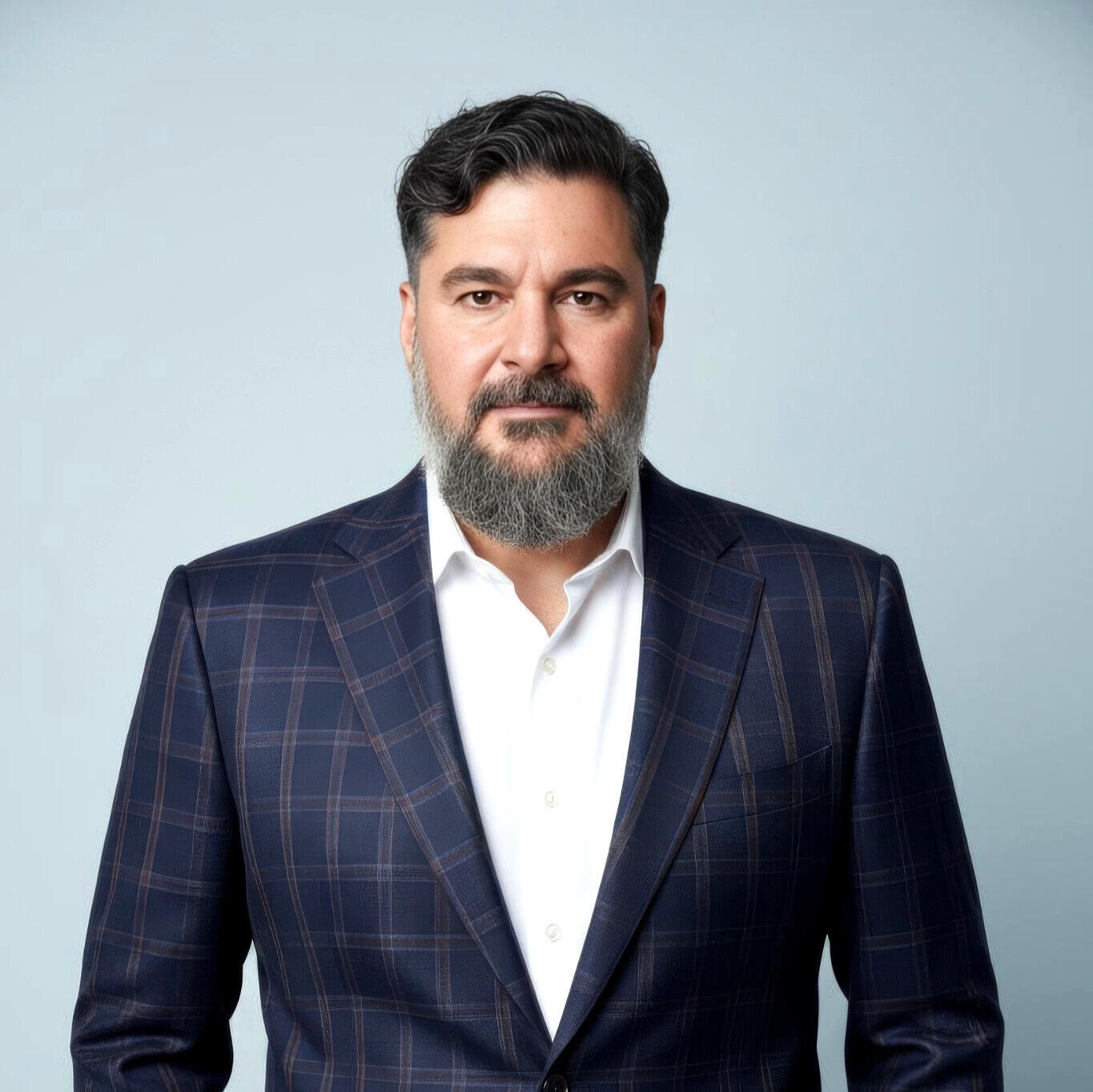
Exhaustion with shallow recognition, "bought" awards, and some voices chosen for optics, not impact.Conviction that the real work — the work of rebuilding trust, preventing burnout, fixing broken systems, and challenging power structures — deserves the spotlight.Top10EmployeeVoices.com is curated by Vasileios Ioannidis as part of the TheTop10Voices Eco-System, a Cyprus-based Tectonic HR™ architect and Fractional CHRO, whose work through HackHR.org is reshaping how we think about people, systems, and scale.This isn’t a ranking.
This isn’t PR.This is a canon in the making — where visibility is earned, not granted.One voice at a time.

A quiet beginning to something loud.
The Top 10 HR Voices was only the prologue.
🜁Now comes the next chapter: Top 10 Employee Voices.
Behind every job title, behind every payslip, lies the real question:
Who carries the weight of work, yet rarely holds the microphone?This isn’t a stage for executives alone.It’s a space for the ones who build quietly, endure silently, and still shape everything.The ones who feel the pressure points first — and who, when they speak, shift the ground beneath us.
The Top 10 Voices Eco-System was never built to flatter power.It was built to expose it, to balance it, and to give voice where silence has been the norm.We began with HR — to show that the system can critique itself.
We turn now to Employees — the ones who live the fractures every day.
And soon, the C-suite — because even the highest floor needs a mirror.This isn’t a ranking.It’s a living record of those who dare to speak.If you’ve arrived here, you’re already part of its core.
Thank you
The relevant department will reach out to you shortly.